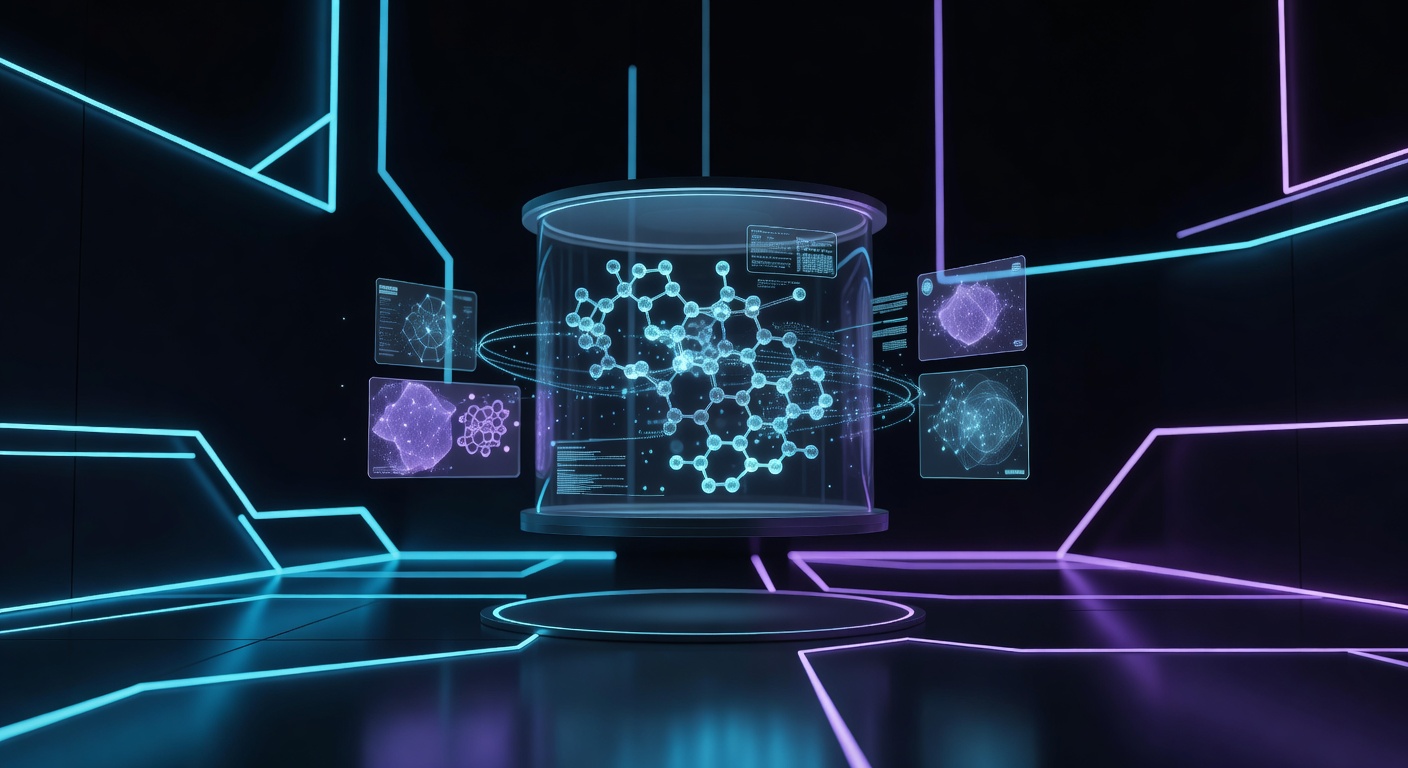
## The Lab That Never Sleeps
Somewhere in a well-funded biotech facility, a robotic arm picks up a vial, mixes compounds, runs an assay, records the results, and feeds them into a machine learning model. The model updates its predictions. The arm reaches for another vial. No human touched anything. No one gave instructions between steps. The experiment designed itself, executed itself, and learned from itself — all in the time it took you to read this paragraph.
This is not science fiction. This is what the pharmaceutical industry now calls a self-driving laboratory, and in 2026, these facilities are moving from proof-of-concept demos to genuine drug discovery engines.
## What Exactly Is a Self-Driving Lab?
A self-driving lab (SDL) combines three things that used to live in separate departments: robotic automation for physical experiments, AI models for hypothesis generation and data analysis, and closed-loop feedback systems that connect the two without waiting for a human to interpret results.
The concept is not brand new. Automated screening has existed for decades. But older systems followed pre-programmed protocols. They ran the same experiment thousands of times on different compounds, brute-forcing their way through chemical space. SDLs do something fundamentally different — they decide what to test next based on what they just learned.
Think of it as the difference between a GPS that gives you turn-by-turn directions and a self-driving car that reroutes in real time when it sees traffic ahead. Both get you there, but one adapts.
Why 2026 Is the Tipping Point
Several forces converged this year to push SDLs from academic curiosity to industrial reality.
Hardware got cheaper and better. Lab robots from companies like Opentrons and Hamilton have dropped in price while gaining precision. A mid-range automated liquid handler that cost $300,000 five years ago now sells for under $80,000 with better specs.
AI models for chemistry matured. Foundation models trained on molecular data — NVIDIA’s BioNeMo platform being a prominent example — can now predict protein structures, binding affinities, and ADMET properties with enough accuracy to guide real experiments. Eli Lilly announced a co-innovation lab with NVIDIA specifically targeting these capabilities.
Integration tools caught up. The hardest part of building an SDL was never the robot or the AI — it was connecting them. New middleware platforms now bridge lab information management systems (LIMS), electronic lab notebooks (ELNs), and ML pipelines into a single workflow. Thermo Fisher’s collaboration with NVIDIA aims to make scientific instruments natively intelligent, reducing the integration tax.
Funding followed. Multiple organizations raised substantial capital in 2025 and early 2026 specifically for autonomous lab facilities. The investment thesis is simple: if an SDL can run 50 experiments per day while a human scientist manages 3-5, the math speaks for itself.
How the Closed Loop Actually Works
The core of any SDL is the design-make-test-learn (DMTL) cycle. Here is how it plays out in practice:
- Design: An AI model proposes a set of candidate molecules or experimental conditions, ranked by predicted likelihood of success. This uses techniques like Bayesian optimization or reinforcement learning to balance exploration (trying something new) with exploitation (refining what already works).
- Make: Robotic systems synthesize the proposed compounds or prepare the experimental conditions. Automated liquid handlers, plate readers, and sometimes even 3D-printed microfluidic chips handle the physical work.
- Test: The same robotic platform runs biological assays, measures outcomes, and captures data in standardized formats. High-throughput screening can evaluate thousands of conditions in a single run.
- Learn: Results feed directly back into the AI model. The model retrains or updates its predictions, then generates the next round of candidates. The cycle repeats without pause.
What makes this powerful is speed and consistency. A traditional drug discovery team might complete one DMTL cycle per week. An SDL can complete multiple cycles per day. Over months, that compounding advantage is enormous.
Real Results, Real Limitations
The results so far are encouraging but require honest context.
Insilico Medicine reported positive Phase IIa results for ISM001-055, an AI-designed drug targeting idiopathic pulmonary fibrosis. The molecule was identified using their AI platform and moved into clinical trials faster than traditional timelines would suggest. This is one of the furthest-along AI-originated drugs in the clinic.
Zasocitinib (TAK-279), originally designed using Schrödinger’s physics-based computational platform and later acquired by Takeda through the Nimbus Therapeutics deal, has advanced to Phase III trials. While not from a fully autonomous lab, it demonstrates how computational design accelerates the pipeline.
Argonne National Laboratory operates one of the most advanced self-driving lab facilities in the public sector, focusing on materials discovery. Their system has demonstrated the ability to find optimal material compositions 10 times faster than conventional approaches.
But here is the honest part: no SDL has yet independently discovered a validated drug candidate from scratch. The technology accelerates specific stages — hit identification, lead optimization, formulation screening — rather than replacing the entire R&D pipeline. Human scientists still define the therapeutic hypothesis, interpret clinical significance, and make go/no-go decisions.
The Integration Challenge Nobody Talks About
Building an SDL is not just a technology problem. It is an organizational one.
Most pharma companies have wet lab teams and computational teams that operate in separate buildings, use different software, follow different workflows, and sometimes report to different executives. Merging these into a single closed-loop system means changing how people work, not just what tools they use.
Data standardization is another bottleneck. Lab instruments from different manufacturers output data in different formats. A plate reader from Molecular Devices speaks a different language than a mass spectrometer from Agilent. Someone — or something — has to translate.
Then there is the cost. A fully equipped SDL facility requires millions in capital expenditure. That limits adoption to well-funded biotechs and Big Pharma companies. Startups and academic labs are building partial SDLs, automating specific stages while keeping humans in the loop for others.
What Comes Next
The trajectory for self-driving labs points in a clear direction: more autonomy, broader scope, lower cost.
Digital twins are becoming part of the SDL stack. Before running a physical experiment, the system simulates it computationally, filtering out likely failures and reducing wasted reagents and time. The FDA has expanded its AI frameworks to include guidance on digital twin validation, signaling regulatory acceptance.
Multi-omics integration is giving SDLs richer data to learn from. Instead of optimizing for a single assay readout, next-generation systems incorporate genomics, proteomics, and metabolomics data to build more complete models of drug-target interactions.
Cloud-connected SDLs will allow multiple facilities to share learnings without sharing proprietary data, using federated learning approaches. A failed experiment at one lab becomes useful negative data for another.
The most ambitious vision — and it remains years away — is fully autonomous drug discovery, where an SDL identifies a disease target, designs a therapeutic molecule, optimizes it through iterative testing, and produces a clinical candidate ready for regulatory submission. We are not there yet. But the pieces are falling into place faster than most industry observers expected.
The Bottom Line
Self-driving laboratories represent a genuine shift in how drugs are discovered. They are not replacing scientists — they are giving scientists a 24/7 research partner that never gets tired, never forgets a data point, and improves with every experiment. For patients waiting for treatments for rare diseases, cancers, and chronic conditions, that acceleration matters.
The technology is real. The results are promising. The limitations are honest. And the investment is growing. If you work in pharma, biotech, or healthcare — or if you care about how the next generation of medicines gets developed — SDLs deserve your attention.
Want to stay updated on AI in healthcare? Check out our coverage of AI health innovations at IssueByte.
📚 You May Also Like
Gyucheol Choi
Senior Data Scientist · ImpriMed Korea
AI researcher specializing in precision medicine and drug sensitivity analysis. Covers AI tools, healthcare AI, and emerging tech with hands-on expertise.
Leave a Reply