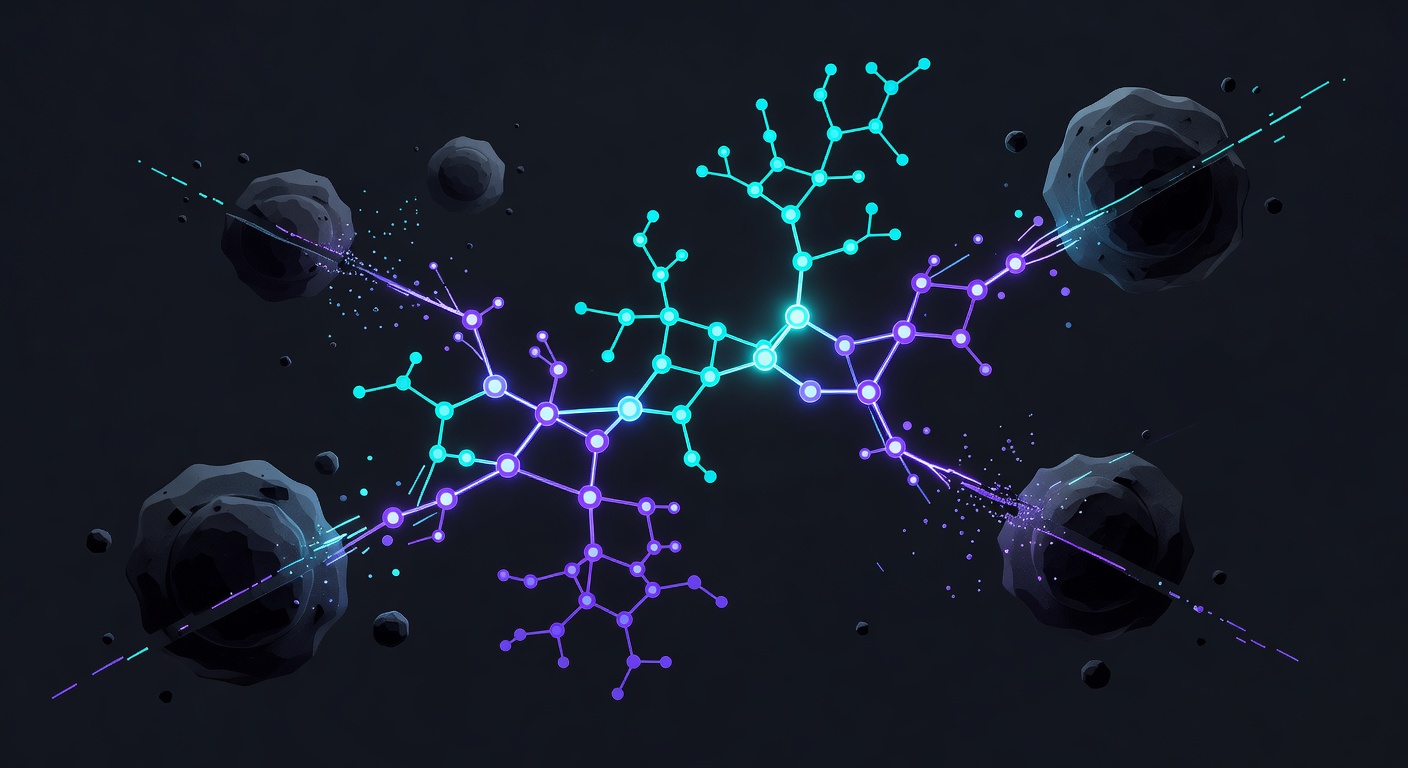
Antibody-drug conjugates have become oncology’s most-watched modality, and 2026 is the year the field stopped being driven by chemistry intuition alone. AI is now sitting in the driver’s seat for target selection, linker chemistry, payload pairing, and even the structural optimization of the full conjugate. The result is a generation of ADCs that hit harder, miss healthy tissue more reliably, and reach the clinic faster than any first-wave product like Kadcyla or Enhertu did a decade ago.
The signal is loud. AACR 2026 in San Diego turned into a referendum on AI-driven ADC platforms. Gilead announced its acquisition of Tubulis to lock in a next-generation ADC pipeline. Startups like Sidewinder Therapeutics and Synthetic Design Lab unveiled platforms built around computational design from day one. World ADC London 2026 panels kept circling back to the same question: how do you build an ADC that adapts as the tumor adapts? The answer, more and more, is software.
The ADC Problem AI Is Actually Solving
ADCs sound simple in the marketing slide. You attach a cytotoxic payload to a monoclonal antibody using a chemical linker, the antibody finds a tumor antigen, the linker releases the payload inside the cancer cell, and the cell dies. Reality has been less cooperative. First-generation ADCs failed for a long list of reasons: payloads detaching too early in circulation, healthy cells expressing low levels of the target antigen, drug-to-antibody ratios that destroyed the antibody’s pharmacokinetics, and resistance mechanisms that emerged within months of treatment.
Each of these problems is a multi-objective optimization that human chemists could only attack one variable at a time. AI changes the unit of work. Instead of iterating on a single linker, models now evaluate the antibody, the linker, the payload, and the cleavage conditions as one coupled system. AlphaFold3-class structure prediction lets researchers model a fully assembled ADC at atomic resolution, including the conformational impact of payload conjugation on antibody binding. That alone was a holy grail two years ago.
Equally important, deep learning models trained on millions of binding events can now predict whether a candidate antibody will hit a tumor antigen with the specificity needed to spare healthy tissue expressing the same protein at lower density. That single capability is what separates a billion-dollar ADC franchise from a Phase 2 failure.
What’s Actually Shipping in 2026
The platform announcements at AACR 2026 made the shift concrete. Synthetic Design Lab launched a platform engineered for ADCs that can adapt as tumors do, treating resistance as a design constraint rather than a post-hoc clinical problem. Sidewinder Therapeutics is building bispecific ADCs whose antibodies engage two tumor antigens at once, raising the bar for tumor selectivity well beyond what monospecific first-generation conjugates achieved.
Debiopharm presented preclinical data on its MultiLINK Duo ADC technology, which loads two distinct cytotoxic payloads onto a single antibody. The clinical logic is straightforward: combine a microtubule inhibitor with a topoisomerase inhibitor, hit two cell-killing pathways simultaneously, and force any resistant clone to evade both at once. Designing the chemistry to make that work without destabilizing the antibody required computational screening at a scale that would have been impossible without modern ML tooling.
Gilead’s Tubulis acquisition was the clearest big-pharma vote on where the value is moving. Tubulis built its pipeline around AI-optimized linker chemistry and proprietary payload classes, exactly the kind of platform investment that accelerates the next ten years of ADC development rather than a single drug. Big pharma is now buying ADC platforms the same way it bought antibody platforms in the 2000s.
The Computational Stack Underneath
The engineering layer underneath these platforms has matured fast. Three pieces matter most.
Target identification at scale. Models trained on tumor expression atlases, single-cell transcriptomics, and immunohistochemistry datasets now rank candidate antigens not just by tumor expression but by the expression delta between tumor and normal tissue. That tumor-versus-healthy gap is the entire therapeutic index of an ADC. AI lets teams screen thousands of candidate antigens in days rather than running a multi-year wet-lab campaign per target.
Antibody and linker co-optimization. Generative models now produce antibody sequences with constrained binding properties, while linker design models predict cleavage kinetics under tumor microenvironment conditions versus systemic circulation. Coupling these models lets a team design an antibody-linker combination as a unit, which is how you avoid the classic failure mode of an excellent antibody saddled with a leaky linker.
Payload-conjugation simulation. AlphaFold3-class tools, plus molecular dynamics on GPU clusters, predict how payload attachment affects antibody folding, target binding, and off-target interaction with Fc receptors. Teams that previously discovered conjugation problems only after preclinical pharmacokinetic studies can now flag them during design.
The same toolchain is being used to design the next generation of resistance-resistant ADCs. AI models that predict drug resistance before treatment begins are now feeding directly into ADC design, letting teams pre-engineer payload combinations that close off the most likely resistance escape routes.
How This Connects to the Rest of Oncology AI
ADC design does not happen in a vacuum. The companies winning in 2026 treat ADC engineering as one node in a tightly integrated AI oncology stack. Patient selection comes from foundation models reading pathology slides and liquid biopsy panels detecting tumor signals earlier than imaging ever could. Trial enrollment runs through AI-driven trial matching systems that identify the right ADC for the right patient based on molecular profile rather than tumor site. And response monitoring now leans on MRD-based endpoints that AI can quantify reliably.
The payoff is shorter feedback loops. A Phase 1 readout that previously took 18 months to inform the next molecule now informs design within a quarter. That compression is what lets a platform like Tubulis or Sidewinder credibly promise five clinical candidates per year rather than one.
The Regulatory and Manufacturing Reality
The FDA has been pragmatic about AI in ADC development, treating it as a discovery and characterization tool rather than a regulated decision-maker. Sponsors still need to demonstrate analytical comparability, payload uniformity, and conjugation reproducibility through standard CMC methods. What AI changes is the speed of CMC optimization, not the bar.
Manufacturing is the harder story. ADC production remains one of the most demanding processes in biotech: mammalian cell culture for the antibody, complex chemical synthesis for the payload, site-specific conjugation chemistry, and aseptic fill-finish at low volumes. Costs per dose remain high, and capacity constraints have already delayed several launches. AI process control, automated cell-line screening, and digital twin manufacturing are showing real impact, but the field still needs the kind of cost-curve breakthrough that AI is starting to deliver in CAR-T manufacturing.
What to Watch Through the Rest of 2026
Three datasets will define the back half of the year. First, the Phase 3 readouts from second-generation ADCs in HER2-low breast cancer and bladder cancer will tell us whether AI-optimized linkers really do reduce off-target toxicity at scale. Second, early Phase 1 data from bispecific ADCs from Sidewinder and others will indicate whether dual-antigen targeting solves the selectivity problem in solid tumors that single-antigen ADCs have struggled with. Third, the Tubulis pipeline under Gilead will be a real-world test of whether platform acquisitions translate into faster IND filings.
If any two of those land cleanly, the ADC market projection moves from a $40 billion category to something closer to $80 billion by the end of the decade, and AI-native ADC platforms become the dominant model for new drug starts in oncology. The companies that built their stack around computational design from the beginning will be the ones writing the next decade of cancer therapeutics, and the ones that treated AI as a tool bolted onto a chemistry-first workflow will quietly fall behind.
The takeaway for anyone tracking the space is straightforward. ADCs were a chemistry story for fifteen years. They are a software story now.
📚 You May Also Like
Gyucheol Choi
Senior Data Scientist · ImpriMed Korea
AI researcher specializing in precision medicine and drug sensitivity analysis. Covers AI tools, healthcare AI, and emerging tech with hands-on expertise.
Leave a Reply